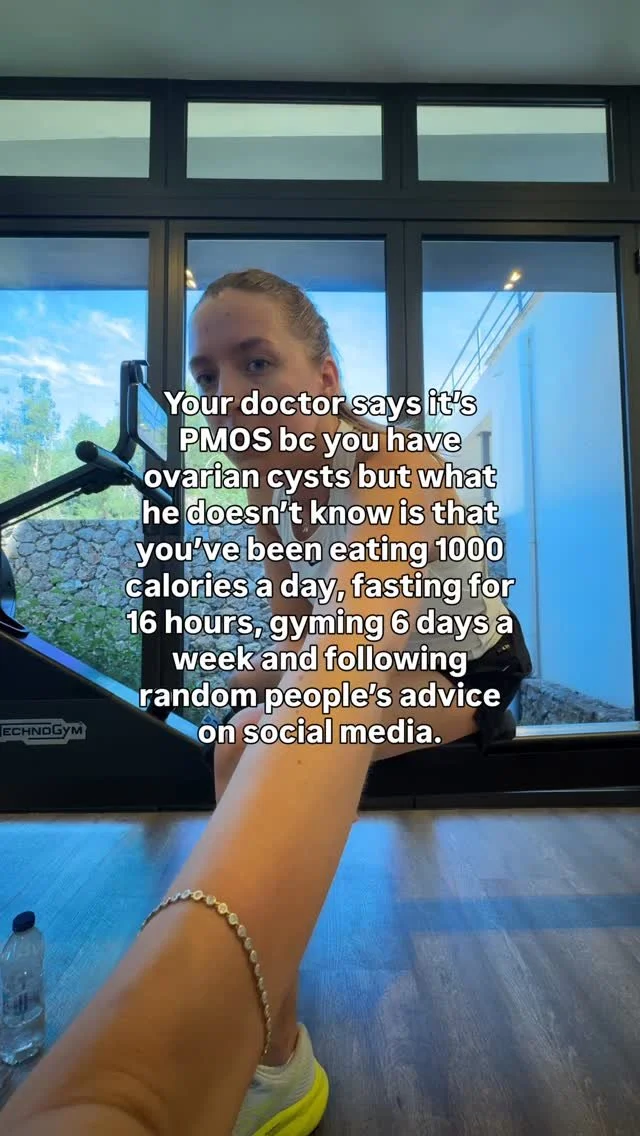
How to Fuel Your Workouts for Hormonal Balance
Strength Training, HIIT or Walking. Different workouts have very different demands on the body.
Many women train regularly but don’t realize that different workouts require different fueling strategies.
Strength training, HIIT and light movement stress the body in completely different ways.
Once you understand how to fuel your workouts properly, you will finally start seeing the results you’ve been waiting for.
Let’s understand how to eat
Strength Training
Strength training mainly stresses your muscles.
What to eat before strength training?
Ask yourself one simple question: Did you eat in the last 2–3 hours?
If yes, you usually don’t need extra fuel. If not, a small snack can help stabilize blood sugar and support your workout.
Examples:
• yogurt + berries
• toast + eggs
• banana + protein
What to eat after strength training?
After strength training, your body focuses on muscle repair and recovery.
Protein (20–30 g) helps repair and build muscle.
Carbs (20–40 g) refill glycogen, the energy stored in your muscles.
Examples:
• eggs + toast
• Greek yogurt + fruit
• protein shake + banana
HIIT or Intense Cardio
HIIT is metabolically very different from strength training. These workouts burn through glycogen very quickly, which is your body’s stored carbohydrate and main energy source during intense exercise
What to eat before to start the workout?
A small carb source can help provide quick energy.
Examples:
• banana
• dates
• toast + honey
What to eat afterwards?
Recovery focuses on refilling energy stores.
Carbs (40–60 g) to replenish glycogen.
Protein (15–25 g) to support recovery.
Examples:
• yogurt + fruit
• oats + protein powder
• protein shake + banana
Walking or Light Movement
Light movement places much less stress on the body.
Think about: walking, yoga, mobility work, easy cycling
Do I need to eat something before a light workout?
In most cases no extra fuel is needed. This is one of the few situations where fasted movement is usually fine for women, because the intensity is low.
And afterwards?
You don’t need a special recovery meal. Just continue with your regular balanced meals during the day.
Why Fueling Matters for
Hormonal Balance
Many women unintentionally under fuel their workouts. They train hard but eat too little before or after exercise.
Over time this can lead to unstable blood sugar, poor recovery and low energy.
For women with PCOS or insulin resistance, fueling workouts properly can be especially important to help stabilize blood sugar and support hormonal balance.
The Simple Rule
If you remember just three things:
Strength training
→ prioritize protein for muscle repair.
HIIT
→ prioritize carbohydrates to restore energy.
Light movement
→ no special fueling needed.
Small adjustments in how you fuel your workouts can make a big difference in your energy, recovery and hormonal balance.